

Coastal Sand Mineral Processing
Coastal sand deposits are polymetallic mineral resources. The beneficiation process for coastal sand primarily involves a "combined process" (including gravity separation, magnetic separation, electrostatic separation, flotation, etc.) to separate these minerals.
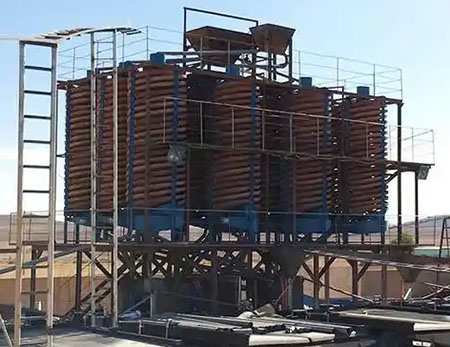
Valuable Minerals in Coastal Sand
1. Zircon (Zircon Sand)
Value and Uses: This is one of the most economically important minerals in coastal sand deposits. Its main component is zirconium silicate (ZrSiO₄), which is the primary source for extracting zirconium (Zr) and hafnium (Hf).
Applications: Zircon sand has a high melting point and corrosion resistance, making it widely used in refractory materials, ceramics (as an opacifier), foundry industries, precision casting, and nuclear industries (for manufacturing cladding tubes for nuclear reactor fuel elements). High-purity zircon is also a high-quality gemstone.
2. Ilmenite & Rutile
Value and Uses: These are the most important ores for extracting titanium (Ti). Both ilmenite (FeTiO₃) and rutile (TiO₂) are primary raw materials for producing titanium dioxide, an extremely important white pigment.
Applications:
Titanium Dioxide: Used in coatings, paints, plastics, paper, inks, and chemical fibers to provide excellent whiteness and covering power.
Metallic Titanium: Known as the "space metal," it has high strength, light weight, and excellent corrosion resistance, making it a key material in aerospace, marine, military, high-end chemical equipment, and medical implants (such as artificial joints).
3. Magnetite
Value and Uses: Although not as valuable as the aforementioned minerals, it is found in considerable reserves in some coastal sand deposits. It is an important iron ore and can be easily recovered through magnetic separation.
Applications: Serves as a basic raw material for iron and steel production.
4. Cassiterite
Value and Uses: Mainly found in coastal sand deposits in specific regions (such as Southeast Asia), it is the primary ore for extracting tin (Sn).
Applications: Used in the production of solder, tinplate (tin-coated steel), tin alloys (such as bronze), and chemical products.
5. Garnet
Value and Uses: A common by-product mineral with high hardness.
Applications: Primarily used in the production of sandpaper, grinding wheels, and abrasive pastes. Higher-quality varieties can also be used as gemstones.
6. Quartz Sand
Value and Uses: Although low in unit price, its total volume is enormous, and its value increases significantly after purification.
Applications: Serves as a fundamental material for the glass industry (flat glass, glass products, optical glass, etc.), construction (as aggregate), foundry industries, and the solar photovoltaic industry (as a source of high-purity silicon raw materials).
7. Tantalite-Niobite and Rare Earth Minerals
Value and Uses: In some coastal sand deposits in specific regions, rare minerals such as monazite (cerium group rare earths), xenotime (yttrium group rare earths), and columbite-tantalite (used in electronics and aerospace industries) may also be present.