

Key Tips: Failures in production are inevitable. What we can do is resolve them as quickly as possible when they occur to avoid greater economic losses. As one of the commonly used grinding equipment, ball mills can encounter various problems. Below are 13 common failure types summarized for you – see how many you've encountered!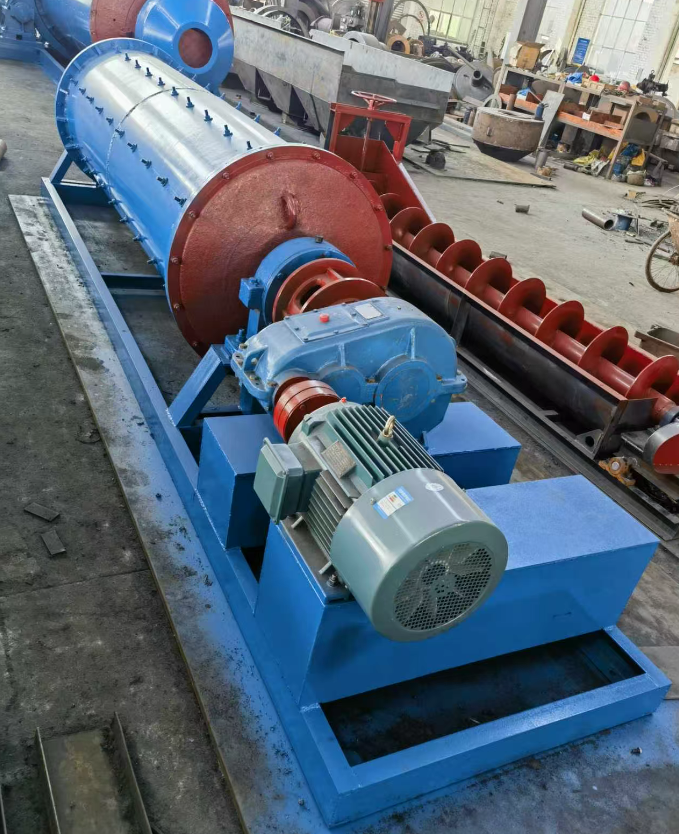
Ball Mill Bearing Overheating, Motor Overload
Causes:
Solutions:
Use the correct lubricant specification; replace deteriorated lubricant.
Add the appropriate amount of oil as specified, generally 1/3 to 1/2 of the bearing clearance is suitable.
Clear blocked lubricant lines.
Correctly install the bearing or coupling.
Adjust the clearance between the journal and bearing liner.
Inspect the oil groove promptly.
Lubricant specification does not match the equipment manual, or the lubricant has deteriorated.
Too much or too little grease.
Blocked lubricant lines preventing oil from reaching lubrication points.
Improper installation of the bearing or coupling.
Excessive or insufficient clearance between the journal and bearing liner, poor contact.
Damaged oil groove preventing oil from flowing to the journal or bearing liner.
Regular Knocking Sound During Operation, Very Loud
Cause: Some liner bolts are not tightened. When the ball mill rotates, the liners strike the mill cylinder.
Solution: Identify the loose liner location based on the sound, find and tighten the loose bolts.
Vibration After Motor Starts with Reducer
Causes:
Solutions:
Adjust the coupling gap according to specifications.
Align the two shafts.
Tighten the coupling connecting bolts symmetrically with equal torque.
Secure the bearing outer ring properly.
The gap between the two coupling halves is too small, unable to compensate for the axial movement caused by the motor's magnetic center during startup.
Misalignment between the reducer, motor, and transmission shaft couplings.
Coupling connecting bolts were not tightened symmetrically and/or with uneven torque.
The bearing outer ring is not fixed properly.
Severe Vibration When Reducer Drives the Mill
Causes:
Solutions:
Readjust to ensure the ball mill axis and the reducer axis are collinear.
Set up settlement monitoring points near the foundation. Observe and readjust if settlement is detected.
The axes of the ball mill and the reducer's balance shaft are not collinear.
For large ball mills, foundation settlement causes displacement due to the large volume and heavy weight.
Dull Operation Sound, Ammeter Reading Drops, Reduced Output
Causes:
Solutions:
Reduce feed quantity; decrease feed particle size.
Reduce material moisture; clean the discharge grate.
Adjust the grinding media ratio and the length of each chamber.
Excessive feed material or overly large feed particle size.
High material moisture content causing ball coating and mill clogging, or discharge grate blockage.
Improper grinding media charge, media mix-up between chambers, or unreasonable chamber lengths.
Reducer Bearing Overheating, Abnormal Operating Noise
Causes:
Solutions:
Check reducer bearing temperature; clear the vent hole.
Install the balance wheel and intermediate wheel according to the specified meshing teeth.
Reducer vent hole is blocked.
The meshing between the balance wheel and the intermediate wheel is not installed according to the specified teeth.
Main Bearing Temperature Too High, Hot, Smoking, or Melting
Causes:
Solutions:
Cool down, then stop the mill for inspection and adjustment; increase oil supply.
Clean and replace with new oil.
Adjust and level.
Adjust and align.
Inspect, repair, and adjust.
Repair the oil supply device.
Adjust clearance, scrape the bearing liner, or repair the journal.
Replace with lubricating oil of suitable viscosity.
Adjust and align.
Increase water supply or lower the supply water temperature.
Oil supply interruption or insufficient oil.
Poor oil quality, or sand/foreign matter entering the bearing.
Improper or uneven installation of the main bearing.
Bent trunnion shaft.
Oil groove too deep, or contact between bearing pad and shaft preventing oil from entering the bearing liner.
Malfunctioning oil supply device, causing interrupted or insufficient oil supply.
Bearing clearance not meeting requirements or poor contact with the shaft.
Lubricating oil viscosity not qualified.
Improper coupling installation.
Insufficient main bearing cooling water or high cooling water temperature.
Localized Wear on the Cylinder
Causes:
Solutions:
Install liners in a staggered pattern.
Repair or replace the liner.
Ensure the liner fits tightly against the cylinder.
Liners were not installed in a staggered pattern.
Operation continued after a liner fell off.
Material scouring between the liner and the cylinder.
Gear Bearing Vibration, Excessive Noise, Accompanied by Impact Sound
Causes:
Solutions:
Tighten the bolts.
Replace the bearing.
Align and adjust the bearing.
Repair or replace the gear; improve lubrication.
Adjust the gear.
Tighten the bolts.
Repair or replace.
Tighten bolts or replace rubber cushions.
Tighten or replace.
Loose bearing cover or bearing seat bolts.
Excessive bearing wear.
Improper bearing installation.
Excessive gear wear, dirty lubricating oil, or lack of lubrication.
Improper gear meshing, excessive radial or axial runout of the large gear.
Loose large gear connecting bolts or loose joint bolts.
Gear machining precision does not meet requirements.
Loose foundation bolts for the trunnion bearing seat or transmission bearing seat, or worn rubber cushions.
Loose coupling bolts or worn coupling rubber elements.
Lubrication System Oil Pressure Too High or Too Low
Causes:
Solutions:
Check oil pipes for blockage or leakage; repair or replace pipes promptly.
Replenish oil supply regularly.
Check if the oil pump is drawing in air or leaking; address promptly.
Oil pipe blockage or leakage.
Insufficient oil supply.
Oil pump malfunction.
Ball Mill Fails to Start or Motor Overloads During Startup
Causes:
Solutions:
Check and repair the motor system.
Clear obstructions from the rotating parts.
Clean the material and grinding media inside the mill. Remove caked material and some media. Mix and agitate the remaining material and media.
Motor system malfunction.
Obstructions in the rotating parts.
After prolonged shutdown, material and grinding media inside the mill were not cleared promptly. Damp material solidified into clumps. During startup, the grinding media doesn't cascade, increasing motor load.
Excessively Rapid Gear Tooth Surface Wear
Causes:
Solutions:
Improve lubrication or replace the lubricating oil.
Adjust the meshing clearance.
Strictly control the machining process; reject non-conforming parts.
Perform heat treatment (hardening/tempering).
Readjust the assembly.
Perform cleaning.
Poor lubrication or lubricant contaminated with impurities/metallic particles.
Excessive or insufficient meshing clearance, poor contact.
Gear machining quality does not meet requirements.
Poor material quality, insufficient tooth surface hardness.
Improper assembly.
Ore sand or other abrasive particles entering between teeth.
Mill Vibration, Abnormal Axial Movement
Causes:
Solutions:
Stop the mill for processing. Use shims to adjust the settled area to level the mill base.
Remove the oil-eroded secondary grout layer, re-embed the anchor bolts, adjust the mill, and then tighten the anchor bolts.
Local foundation settlement causing uneven mill installation.
Foundation base eroded by oil leakage, loose anchor bolts.