

Barite is a common non-metallic mineral with the chemical composition barium sulfate (BaSO₄). It typically appears white or light yellow with a vitreous luster. Barite is used in multiple fields, often serving as a flux in glass production and also as a valuable construction material.
What equipment is required to process barite from raw ore to finished product? This article introduces the key equipment used in barite beneficiation.
I. Jaw Crusher
Raw barite ore is characterized by being brittle, hard, and easily fractured. Using a jaw crusher for primary crushing often yields ideal results in a single stage.
II. Linear Vibrating Screen
The crushed barite ore particles vary in size, which can affect the separation efficiency of the subsequent jig machine. A linear vibrating screen is typically used to screen the crushed ore. Oversized particles are returned to the jaw crusher for further crushing.
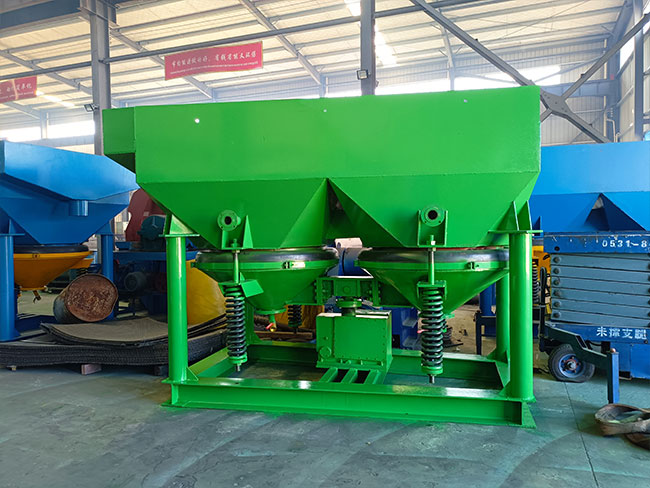
III. Jig Machine
The jig machine separates minerals based on density differences. Through the action of a pulsating water flow, denser barite particles settle to the bottom layer (concentrate), while lighter gangue minerals remain in the upper layer (tailings), achieving effective separation.
IV. Dehydration Screen
The concentrated barite concentrate contains significant moisture, which is unsuitable for transportation and storage. The dehydration screen (also called a high-frequency vibrating screen) plays a crucial role here. It uses high-frequency vibration and multiple screen layers to rapidly remove most surface moisture from the concentrate.
Finally, the dewatered barite concentrate is stockpiled for subsequent loading and transportation.